
Global Sourcing Explained: How Materials Are Selected Across Asia and Europe
Global sourcing explained: how materials are selected across Asia and Europe is one of the most common questions fashion brands ask when they want consistent quality, stable lead times, and reliable manufacturing outcomes. Materials are not a “detail”—they define the final product’s feel, performance, fit behavior, and commercial positioning.
At CSL Garment Trading – FZCO, global sourcing is managed as a structured, traceable process. Our network connects specialized textile markets across Asia and Europe—India, Pakistan, China, Italy, and France—so brands can select the right materials without losing control over standards, compliance, or timelines.
What Global Sourcing Means for Fashion Brands
Global sourcing refers to the strategic selection of fabrics, trims, and components from multiple countries based on capability, reliability, compliance, and value. It is not simply “buying cheaper.” The real purpose is to create a supply chain that delivers the right material, at the right quality level, with predictable continuity.
A brand’s sourcing strategy should be aligned with product category (knitwear, woven garments, outerwear), performance needs (durability, stretch, hand-feel), and target market expectations. When sourcing is managed professionally, it reduces production risk and increases consistency across collections.
How Materials Are Selected Across Asia and Europe
In a controlled system, materials are selected through a staged process. CSL coordinates this workflow between commercial direction (Italy), operational execution (Bangladesh), and administrative governance (Dubai), ensuring that sourcing decisions support production realities.
Step 1: Define Performance, Aesthetic, and Cost Targets
Before any supplier is contacted, the material target is defined: composition, weight, construction, finishing, color performance, shrinkage behavior, and cost range. This prevents sourcing from becoming random or reactive.
Step 2: Identify the Right Textile Market by Specialization
Different countries excel in different textile categories. A global sourcing strategy chooses markets based on specialization rather than convenience.
- India: strong in cotton, yarns, and diverse fabric constructions.
- Pakistan: known for cotton-based textiles and reliable production capability.
- China: broad industrial capacity and technical variety, especially for complex trims and functional materials.
- Italy: premium fabrics, refined finishes, and high-end textile heritage.
- France: specialized materials and premium textile innovation for certain segments.
Step 3: Sampling, Testing, and Production Compatibility Checks
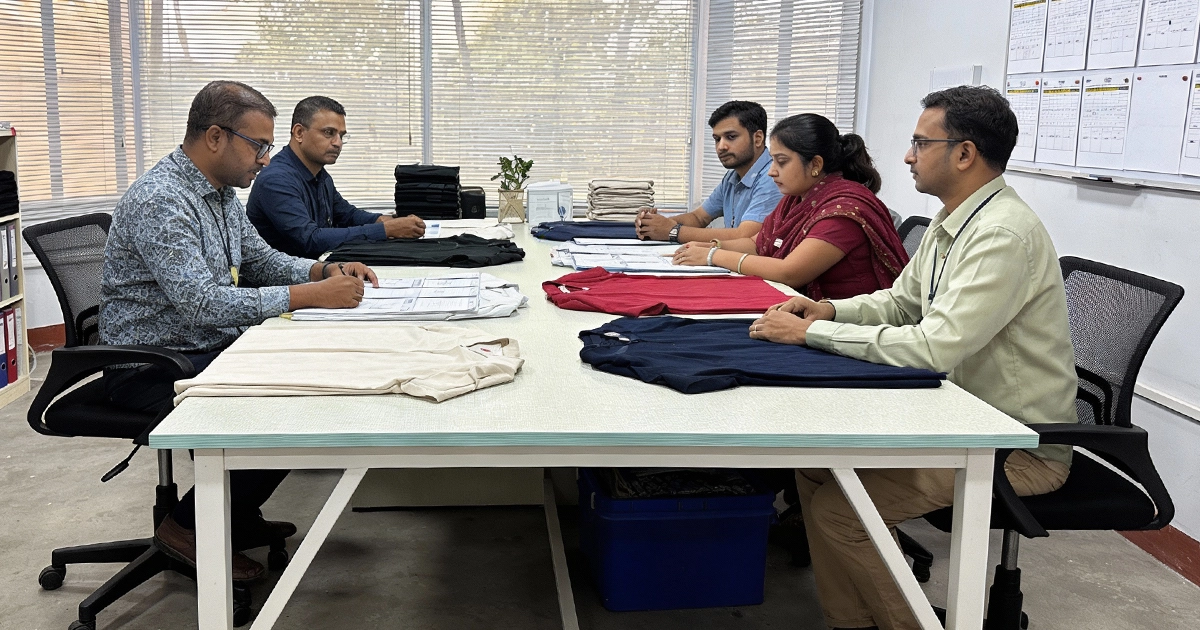
Once materials are shortlisted, sampling begins. Materials must be validated not only for appearance and hand-feel, but also for production compatibility: sewing behavior, color consistency, shrinkage, and finishing stability.
This step is essential because a fabric that looks great in a swatch can behave poorly in production. Global sourcing explained correctly means understanding that sampling protects the entire timeline.
Compliance and Traceability in Global Sourcing
Compliance is a non-negotiable factor in modern sourcing. Materials must meet environmental and social expectations required by European brands. Traceability ensures sourcing decisions are documented, auditable, and defensible.
A structured process includes supplier verification, documentation checks, and transparent reporting. This supports responsible manufacturing and protects brand reputation—especially when producing internationally.
For reference, the Textile Exchange provides widely used industry guidance on responsible textile practices and traceability.
How Global Sourcing Improves Production Reliability
Material selection directly impacts production reliability. When sourcing is coordinated with production planning, brands experience fewer delays, fewer quality disputes, and clearer approvals. A diversified sourcing network also reduces dependency on a single supplier or country, improving resilience during supply disruptions.
This is why global sourcing explained properly is not a “procurement topic”—it is part of production governance. At CSL, sourcing decisions are aligned with development, sampling, and quality control checkpoints.
How CSL Connects Sourcing with the Production Workflow
CSL’s model integrates sourcing into the same operational system that manages development and production. This avoids common issues such as late material changes, inconsistent quality across batches, or misaligned lead times.
If you want the full context of how our network supports stability across production stages, you can also read:
How a Global Apparel Network Strengthens Production Reliability
Why Bangladesh Is the Most Strategic Manufacturing Partner for Italian Brands

Conclusion
Global sourcing explained means understanding that materials drive quality, timelines, and brand perception. By selecting materials across Asia and Europe through a structured, compliant, and traceable process, fashion brands gain consistency, flexibility, and supply chain resilience.
CSL Garment Trading – FZCO connects sourcing strategy with production reality—so material decisions support delivery performance, not just purchasing targets.
Frequently Asked Questions
What does “global sourcing” mean in apparel?
Global sourcing means selecting fabrics, trims, and components from multiple countries based on specialization, reliability, compliance, and value—aligned with production needs.
Why source materials from both Asia and Europe?
Asia offers scale and variety, while Europe provides premium materials and refined finishes. A combined strategy improves quality options and reduces dependency risks.
How are fabrics approved before bulk production?
Fabrics are validated through sampling, technical tests (shrinkage, color fastness, behavior in production), and consistency checks before final approval.
Is compliance part of sourcing, or only production?
Compliance is part of sourcing. Verified suppliers, documentation, and traceability are needed to meet European brand expectations and reduce reputational risk.
How does global sourcing impact production reliability?
It improves reliability by aligning material lead times with production planning, reducing inconsistencies, and preventing delays caused by late material changes.A minimalist, high-end editorial image representing global sourcing in the apparel industry.
A clean world map silhouette made with thin, elegant lines, showing Asia and Europe as the main focus. Subtle connection lines link key sourcing regions: India, Pakistan, China, Italy, and France.
In the foreground, abstract textile textures appear integrated into the map lines — woven patterns, fabric surfaces, and material grids — without showing people or factories.
The composition feels technical, controlled, and professional, conveying material selection, supply chain coordination, and sourcing strategy.
Color palette is muted and corporate: dark greys (#212828), soft charcoal, off-white accents.
Lighting is soft and even, with a premium, modern aesthetic.
No text, no logos, no flags, no country names.
Ultra-clean, contemporary, suitable for an international apparel sourcing company website.